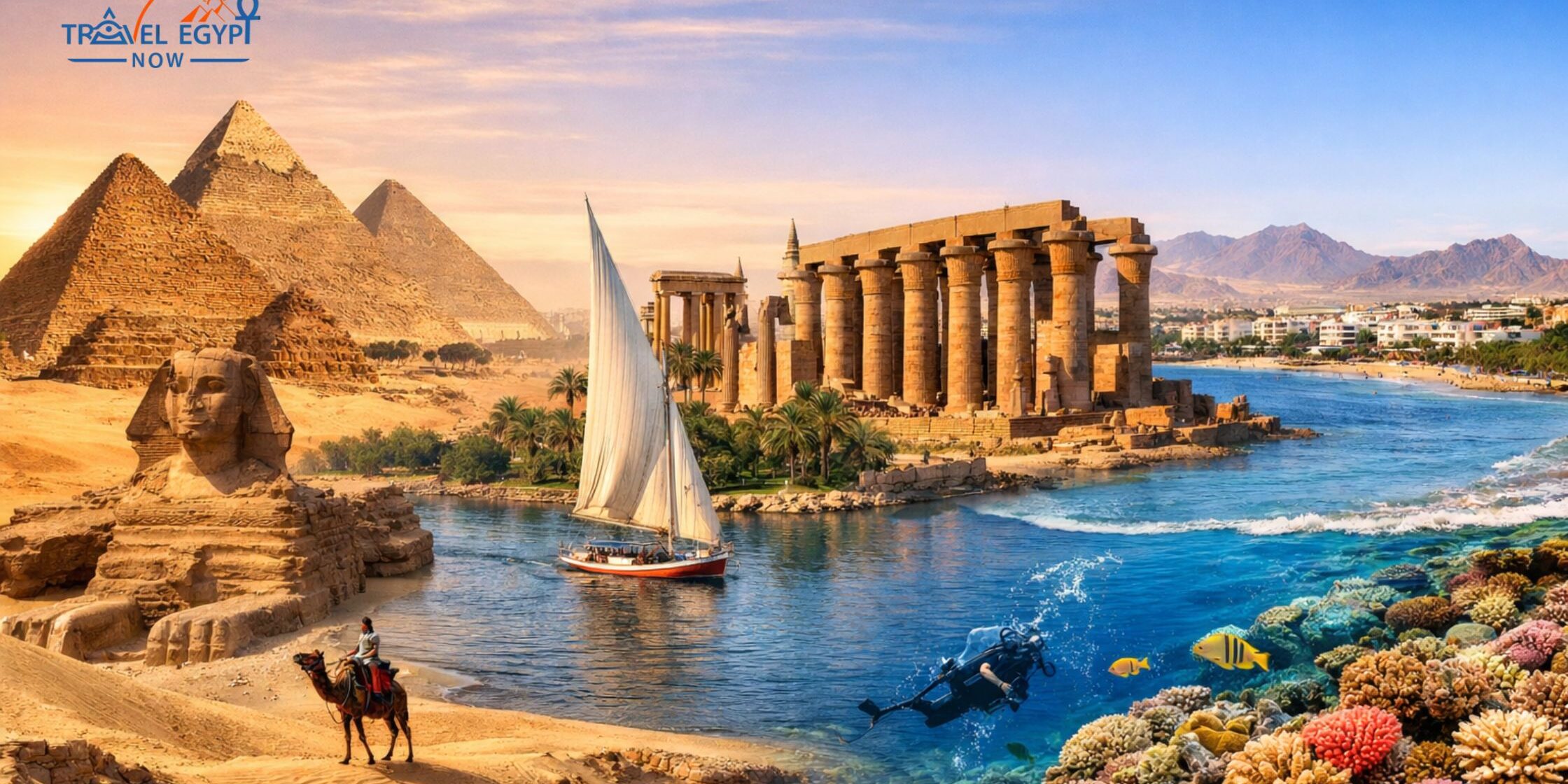
Egypt isn’t just another destination on a map. It’s where history comes alive right before your eyes. You’ll walk where pharaohs walked, touch stones that have stood for thousands of years, and see things that most people only read about in books.
Planning a trip here can feel overwhelming. There’s so much to see and do. That’s why Travel Egypt Now exists to help you figure out what really matters. This blog acting as Egypt travel guide will discuss the ten places you absolutely need to visit.
1. The Pyramids of Giza and the Sphinx
Let’s start with the obvious one. The pyramids are massive. Like, way bigger than you think. Pictures don’t do them justice.
The Great Pyramid took 20 years to build and used over 2 million stone blocks. Nobody’s entirely sure how they did it. That mystery makes standing there even cooler.
The Sphinx sits nearby with its weathered face still watching over everything. You can walk right up to these monuments. Get there early before tour buses arrive. The morning light makes everything look golden.
Here’s what you need to know:
- Bring water because it gets hot
- Wear good walking shoes
- Camel rides cost extra, but make great photos
- Skip the people offering “free” tours (they’re not actually free)
2. Egyptian Museum in Cairo
This place packs more history into one building than seems possible. King Tut’s gold mask sits behind glass, and it’s genuinely stunning. The detailed work on that thing is insane.
You’ll see mummies, jewellery, weapons, toys, and everyday items from ancient times. It’s like peeking into someone’s house from 3,000 years ago. The museum has too much to see in one day. Focus on what interests you most.
Getting an Egypt tour guide helps. They know which rooms to hit and can explain what you’re actually looking at. Otherwise, it’s easy to walk past important stuff without realising it.
3. Valley of the Kings
Cross the Nile from Luxor, and you’ll find where pharaohs were buried. Over 60 tombs hide in this desert valley. The most famous is King Tut’s, though bigger tombs exist with better artwork.
The paintings inside blow your mind. Colours still look bright after thousands of years. Each tomb tells a different story about the afterlife. Ramses VI’s tomb has an astronomical ceiling that maps out the night sky.
You can’t take photos inside. Put your phone away and actually look around. The details are incredible when you’re not trying to get the perfect Instagram shot.
4. Abu Simbel Temples
These temples sit way down south near Sudan. Four giant statues of Ramses II guard the entrance. Each one stands 20 meters tall, carved straight from the mountainside.
Here’s something wild: they moved the entire temple in the 1960s. Lake Nasser was being created, and the temples would have flooded. Engineers cut everything into blocks and rebuilt it on higher ground. You can’t even tell.
Twice a year, sunlight goes all the way inside to light up statues in the back room. The ancient Egyptians designed it that way on purpose.
Getting here takes effort. You’ll need to fly or drive several hours from Aswan. But seeing those giant faces staring out across the desert makes the trip worthwhile.
5. Luxor and Karnak Temples
Luxor feels like an open-air museum because ancient buildings pop up everywhere. The Karnak Temple Complex covers an area bigger than most theme parks. Walking through the Great Hypostyle Hall feels like being in a stone forest. Those columns reach way up, covered in hieroglyphics from floor to ceiling.
Luxor Temple sits right in the modern city. At night, they light it up, and the whole place glows. The avenue connecting both temples just reopened after restoration work. Hundreds of sphinx statues line both sides.
Give yourself a whole day here. Your feet will hurt by the end, but it’s worth it. This is the peak cultural heritage of Egypt.
6. Aswan and Philae Temple
Aswan moves more slowly than Cairo or Luxor. The Nile looks prettier here with islands dotting the water. You’ll need a boat to reach Philae Temple, which sits on its own little island.
The temple honours Isis, an important Egyptian goddess. The island setting makes it feel special. Water surrounds you.
Take a felucca ride while you’re here. These traditional sailboats cruise quietly along the Nile. Sunset is the best time. The Nubian villages nearby have brightly painted houses worth checking out.
The Unfinished Obelisk sits in an ancient quarry. Workers abandoned it when cracks appeared. Seeing it teaches you how they actually made these things.
7. White Desert National Park
Imagine landing on another planet. That’s what the White Desert feels like. Wind carved white chalk rock into weird shapes over millions of years. Mushroom rocks, tall spires, and smooth curves spread across the landscape.
At sunset, everything turns orange and pink. At night, stars fill the entire sky because there’s zero light pollution. Camping overnight is the move here. Tour companies set up tents and cook dinner over campfires.
This isn’t your typical Egyptian cultural tour experience. No ancient temples or hieroglyphics. Just nature spectacularly doing its thing. The drive from Cairo takes a while, but the scenery makes it an adventure.
8. Alexandria on the Mediterranean Coast
Alexandria mixes Greek, Roman, and Egyptian history together. Alexander the Great founded the city, and it became Egypt’s capital for almost 1,000 years.
The new library honours the ancient Library of Alexandria that burned down long ago. The building itself looks fantastic. Inside, you’ll find books, museums, and art galleries.
Walk along the Corniche waterfront. The Mediterranean breeze feels nice after the desert heat. The Citadel of Qaitbay was built where the famous Lighthouse once stood. The Catacombs show how different cultures blended their burial traditions.
Fresh seafood restaurants line the coast. The city has a different vibe from the rest of Egypt. More laid back and coastal.
9. Siwa Oasis
Siwa sits way out near Libya. Until recently, it stayed pretty isolated. Palm trees grow around natural springs and salt lakes. The Oracle Temple here supposedly gave advice to Alexander the Great.
Buildings use mud brick, giving the town an old-school desert feel. Cleopatra’s Bath is a stone pool fed by a natural spring. You can actually swim in it.
Dates from Siwa taste better than dates from anywhere else in Egypt. The local Berber culture keeps strong traditions alive. People here speak a different language from the rest of Egypt.
Getting to Siwa takes planning, but that’s part of what makes it special.
10. Sharm El-Sheikh and the Red Sea
The Red Sea coast offers a complete change of pace. Sharm El-Sheikh is a beach resort central. But the real attraction is underwater.
Coral reefs here rank among the world’s best. Fish of every colour swim around in crystal clear water. Ras Mohammed National Park protects the best diving spots. Even if you don’t dive, snorkelling works great. Glass-bottom boats show you the reef without getting wet.
Mount Sinai sits nearby. People hike up before sunrise to watch the sun come up from the top. St. Catherine’s Monastery at the base is one of the world’s oldest still-running monasteries.
Planning Your Trip with Travel Egypt Now
Visit between October and April. Summer gets brutally hot, especially down south. During Ramadan, restaurants close during the day and schedules change.
Dress modestly at religious sites. Cover your shoulders and knees. Bring a light scarf that works for both sun protection and temple visits. Egyptians are generally friendly and helpful to tourists.
Learn a few Arabic words. “Shukran” means thank you. “La shukran” means no thank you (proper in markets). Small efforts go a long way.
FAQs
When should I plan my Egypt trip to see the most sites comfortably?
Plan your Egypt travel between October and April. The weather stays cooler, making it easier to explore outdoor sites. Summer heat can reach 40°C, which makes temple visits pretty miserable.
How much time do I need to really experience Egypt's cultural heritage?
Give yourself at least 10 days to see the Cultural heritage of Egypt properly. That covers Cairo, Luxor, Aswan, and maybe one more spot. Rushing through in five days means missing a lot.
What makes Egypt cultural tours different from exploring on my own?
Egypt cultural tours provide guides who explain what you’re seeing. They handle logistics and often skip ticket lines. Going solo gives you more freedom but requires more research.
What essentials should I pack for my Egypt travel adventure?
For Egypt travel, pack light cotton clothes, comfortable shoes, sunscreen, and a hat. Bring a refillable water bottle. A small flashlight helps in dim tombs.
Where can I learn about the Cultural heritage of Egypt beyond the famous monuments?
Experience the Cultural heritage of Egypt in local markets, traditional coffee shops, and smaller villages. Egyptian cultural tours sometimes include these, but you can also explore on your own.
Wrapping Up
Egypt gives you stories you’ll tell for years. These ten places show you why this country has fascinated people forever. From massive pyramids to quiet oases, every spot offers something different.
Start with this Egypt tour guide and build your own adventure. Visit Travel Egypt Now when you’re ready to see history come alive. The pyramids aren’t going anywhere, but your chance to see them shouldn’t wait forever.